
What Is Grimdark Fantasy? A Clear Definition for Readers
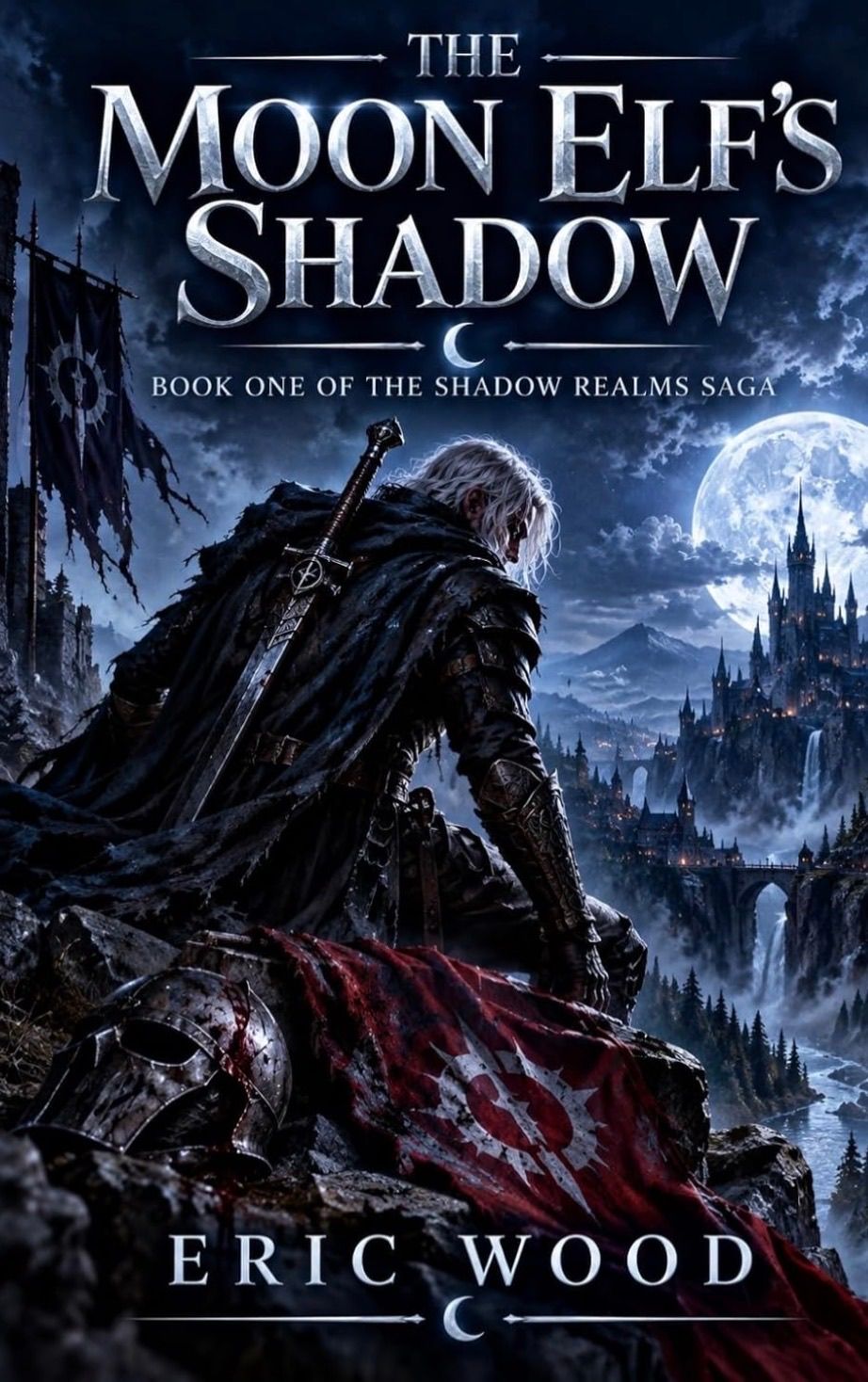
The label appears everywhere: on book pages, in recommendation threads, and in conversations about fantasy that refuses to soften its edges.
But what does it actually mean? People often use grimdark as if the meaning were obvious, when in practice it gets applied to several different kinds of dark fantasy. At its core, grimdark fantasy is fantasy shaped by consequence. It places its characters in hostile worlds where power corrupts, morality becomes unstable, and survival usually demands a cost that cannot be paid cleanly. The darkness is not there for decoration. It changes what people do, what they become, and what remains after the battle ends.
What Does Grimdark Mean?
At its clearest, grimdark fantasy is a form of fantasy defined by bleak conditions, morally compromised characters, serious violence, and a deeply pessimistic view of power and survival.
The label has boundaries, but they are looser than many readers assume. Grimdark is not governed by a single official rulebook, and different readers, writers, publishers, and critics tend to stress different features when they use the term.
Some readers hear grimdark and think first of moral ambiguity. There are no flawless heroes waiting to restore a broken kingdom, every choice carries compromise, and every alliance may conceal an appetite for control.
Others focus more on the world itself. In that reading, grimdark is a setting where brutality and corruption are not confined to one tyrant or one ancient evil, but have worked their way into institutions, traditions, and the habits of the people trying to survive inside them.
Just as often, the term points to consequence. Wounds do not vanish when the chapter turns, trauma is not there only to make a character look deeper than they are, and victory does not wash clean the methods used to achieve it.
Taken together, those qualities create the expectation readers usually bring to grimdark fantasy books and grimdark fantasy novels: the world will not protect its people, and the story will not offer an easy moral escape.
Darkness Must Reach the Structure of the Story
A dark setting alone does not make a fantasy story grimdark. A ruined castle, a cursed forest, an ancient creature, or a night lit by a red moon can establish atmosphere. That is darkness at the level of image, and fantasy has always had room for that kind of shadow.
Grimdark goes further by pushing darkness into the structure of the world itself. It shapes the laws, the loyalties, the systems of power, and the choices available to the characters. The real threat is often not just that a monster is approaching, but that the people claiming to defend the realm are also protecting the machinery that keeps it broken.
That is why grimdark so often feels larger than a simple conflict between heroes and villains. The story starts asking harder things: what kind of evil survival requires, what has to be surrendered to gain power, and whether a person can resist a corrupt system without becoming useful to it in the process.
When a setting works this way, the world stops being a backdrop and starts acting on the people inside it. It trains them, rewards certain instincts, and punishes others. A character who shows mercy may save one life and endanger many more. A character who chooses revenge may gain justice for the dead while becoming another instrument of suffering. The choices remain recognizably human, but none of them stay clean.
Consequence Is the Heart of the Label
Grimdark is not defined by how much violence a story contains. It is defined by what violence leaves behind.
A battle can be brutal without being grimdark if every wound exists only for spectacle. A character can kill without changing if the story treats the act as a temporary obstacle. A kingdom can fall without real consequence if the next chapter simply restores the old order.
In grimdark fantasy, harm tends to remain present. It can live in the body, in a damaged relationship, in a changed sense of identity, or in a shift in power that ripples far beyond the original act. Sometimes the consequence is immediate. Sometimes it arrives later, after a character has already convinced themselves they can live with what they did.
That lasting pressure is one of the clearest ways to understand the grimdark fantasy definition. Darkness is not simply something that happens to the characters. It becomes part of what they carry. A choice made for protection can harden into control. A secret kept in the name of loyalty can end in betrayal. A weapon taken up in desperation can become the only language a character knows how to speak.
None of that requires a story to end in total despair. Grimdark is not automatically nihilism. Some stories leave room for resistance, loyalty, sacrifice, or a narrow form of hope, but when hope appears, it usually costs something. It has to survive the world as it is, not a version of the world briefly made harmless for the sake of a comforting conclusion.
Moral Ambiguity Is More Than Making Everyone Cruel
Another common misunderstanding is that grimdark means every character must be equally vicious. It does not. Moral ambiguity is not the absence of morality. It is what happens when moral choices become difficult to separate from fear, power, history, and survival.
A character may protect someone for reasons that are both compassionate and possessive. An act of loyalty may also serve ambition. A person may commit unforgivable violence and still be lucid enough to understand, afterward, what they have become.
What matters most is not whether a character can be sorted neatly into good or bad. It is what they are willing to do when goodness becomes dangerous.
This is also where morally complex protagonists part company with simpler antiheroes. An antihero may break the rules while staying emotionally certain about the cause. A grimdark protagonist is more often forced to examine the rules, the cause, and the self who benefits from both. They may want freedom while repeating the methods of their captors, or hate oppression while learning to command through fear. They may pursue revenge only to find that revenge offers no final version of the self, only another choice waiting beyond the last one.
What gives that arc its weight is recognition. The protagonist understands the darkness around them because some part of it has entered their own thinking. Redemption is still possible under those conditions, but it becomes uncertain, difficult, and meaningful.
The Refusal of a Clean Rescue
Many forms of fantasy are built around rescue. A chosen figure rises, a hidden power awakens, a wise guide appears, and a fellowship holds together long enough to carry the burden beyond the reach of darkness.
Grimdark fantasy is more interested in what happens when rescue arrives too late, or when the person offering it wants something in return.
That does not mean grimdark cannot contain friendship, sacrifice, love, or loyalty. If anything, those things often matter more because the surrounding world is so hostile. A bond carries more weight when betrayal is plausible, mercy matters more when cruelty would be easier, and trust becomes far more costly when every character has been taught that vulnerability is a weakness others will exploit.
What grimdark refuses is not hope itself, but unearned hope. A clean rescue cannot erase the years that came before it. A victory cannot make an abusive system harmless. A new identity cannot be claimed simply because the old one has become painful. The character still has to decide what they will carry forward, and that decision may be the real climax beneath the visible conflict.
Is Grimdark Fantasy the Same as Dark Fantasy?
No. Dark fantasy is the broader term. It can include horror, menace, tragic histories, supernatural danger, gothic atmosphere, or worlds where beauty and terror exist side by side.
Grimdark fantasy is a narrower conversation within that wider field, with greater emphasis on moral compromise, systemic corruption, lasting harm, and bleak or uncertain outcomes.
Dark fantasy can contain genuine redemption and clear moral opposition. Grimdark can contain those elements too, but it usually tests them more severely. The difference is not simply a matter of one being dark and the other darker. It is a matter of function. In dark fantasy, darkness may shape the atmosphere, the threat, or the emotional tone. In grimdark, it more often reaches into the world’s rules, the characters’ identities, and the cost of whatever ending they manage to reach.
The labels overlap, and readers will not always use them in exactly the same way, so I think it is more useful to treat grimdark as a set of expectations than as a sealed category. For the purpose of this article, the distinction is straightforward enough: dark fantasy describes a broad field of shadow, while grimdark makes consequence, compromise, and bleakness central to the experience.
Is Grimdark Fantasy for You?
The label can help you decide what kind of reading experience you want.
Grimdark may be right for you if you want:
- Characters who are shaped by difficult choices rather than protected from them.
- Worlds where power has consequences beyond the immediate struggle.
- Stories that examine loyalty, betrayal, revenge, identity, and survival.
- Conflict that leaves emotional and physical marks.
- Hope that must be defended instead of assumed.
- Protagonists who may be sympathetic without being safe, innocent, or easily redeemed.
It may not be right for you if you want a clear division between good and evil, victories that restore what was lost, or stories where violence can be left behind once the immediate threat has passed.
That is not a judgment against either preference. A genre label is a threshold, not a command. It tells you what a story may ask of you, not whether your answer should be yes.
The more useful question is what the darkness is doing. Some stories use it to create fear. Some use it to expose corruption. Some use it to test whether a person can remain human after being trained to become something else.
Where Shadow Realms Enters the Conversation
The Shadow Realms Saga is positioned as adult dark epic fantasy. It is not presented as a grimdark series. But it does engage with some of the concerns readers often bring to the grimdark conversation, especially when it comes to violence that leaves a mark, systems that shape identity, loyalty tested by control, and power that asks more than anyone can safely give.
When I built this world, I was never trying to write darkness for its own sake. I was interested in pressure: what happens to a person when identity is shaped by coercion, when loyalty is trained into them, and when survival starts to blur the line between what was done to them and what they may later choose to do themselves.
Kael’thar, called Kael later in the saga, and Ghost by the Crimson Veil, is a moon elf taken as a baby and raised deep in the Underdark by the shadow thieves of the Crimson Veil.
He grows up among dark elves in an ancient, hostile world alive with danger. He is visibly marked as an outsider, even as the guild around him works to define what he is allowed to become.
The Crimson Veil is not simply a group of villains waiting to be defeated. It is a formative system of abuse, control, training, and identity theft. Its culture treats violence as craft, discipline, instruction, and control.
That is the part of the story that matters most to me. The central wound of The Moon Elf’s Shadow is not only what Kael has endured, but the question of who he can become when nearly everything he was taught about himself was designed by people who wanted to use him. That question of identity—what is taken, what remains, what can still be reclaimed—sits at the heart of the saga for me, and the darkness in these books lives there more than anywhere else. Naming the wound does not remove it. Surviving it does not make its consequences disappear.
Labels Tell You What to Expect
So, what is grimdark fantasy?
It is fantasy where bleakness is more than atmosphere, where moral certainty is tested, where power leaves wounds, and where violence carries consequences. If hope survives, it survives by passing through the same darkness as everyone else.
Labels still have limits. They can tell you what kind of experience a story is likely to offer before you cross the threshold, but they cannot tell you what a particular book will make of its darkness, or what it will ask you to carry after the final page.
If you want to begin with mine, start where Kael’s wound first opens in The Moon Elf’s Shadow.